How the Sun, water and air make weather
The uneven stovetopThe uneven stovetop
Picture a pot of soup on a burner that only heats one side. The soup over the flame warms, rises and swirls toward the cool side, where it sinks again. Earth’s atmosphere is that soup. The Sun heats the tropics much more than the poles, and the air never stops moving to even things out. That moving, wet air is weather.
Worked example: explain why a summer afternoon in Houston often ends in a thunderstorm.
Step 1: The Sun heats unevenly. Sunlight hits near the equator almost straight on and the poles at a slant, so the tropics and the ground in summer get the most energy per patch.
Step 2: Warm air rises. The ground warms the air above it. Warm air is less dense, so it rises and leaves lower air pressure below.
Step 3: Water joins in. Sunlight evaporates water from the Gulf of Mexico. The rising air carries that water vapor up, where it cools and condenses into clouds, releasing more heat that pushes the air higher.
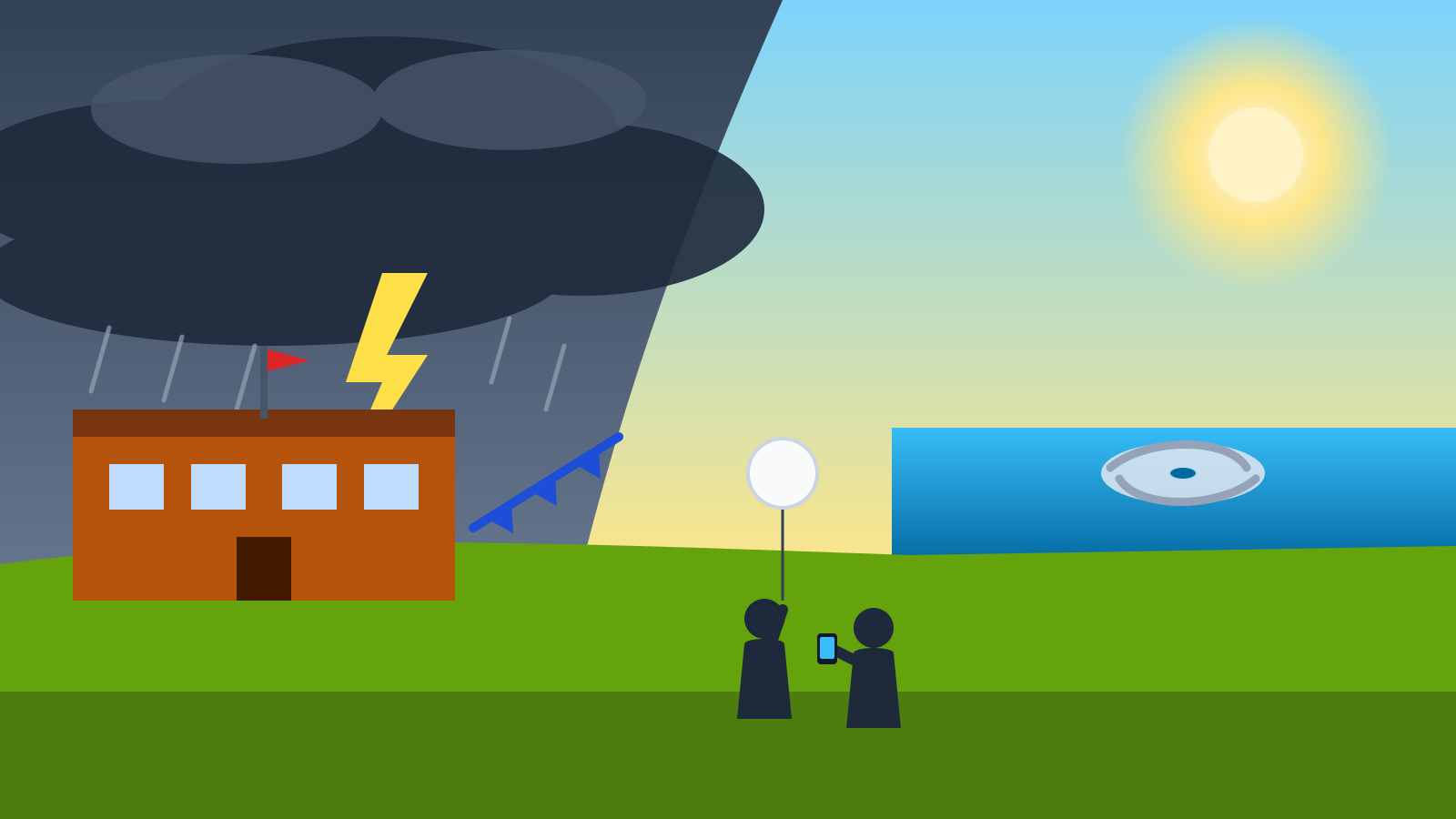
Step 4: The cloud grows into a storm. Tall clouds drop rain and lightning. Cool air sinks around the storm, and wind rushes in to replace the rising air.
Sun heats, warm air rises, water vapor condenses into clouds, and wind fills the gap: that cycle is weather.
Try it: aim the sunlight
Slide from the equator toward the pole. The same beam of sunlight hits the ground at a slant and spreads out.
At 30° (near Houston, Texas), the same beam covers 1.2 times as much ground, so each patch gets about 87 percent of the equator’s sunlight. Less energy per patch: warm summers and cold winters.
Key words
- Weather: the condition of the air at one place and time: temperature, wind, clouds and rain.
- Climate: the average weather of a place over many years, usually 30 or more.
- Air pressure: the push of the air above you. Rising warm air means low pressure; sinking cool air means high pressure.
- Humidity: how much water vapor is in the air.
Big mistake to avoid
Mixing up weather and climate. One cold week is weather. Climate is the pattern over decades, so a snowy day does not cancel a warming climate, and a hot day does not prove one.
Cool science secret
When water vapor condenses into a cloud, it gives off the heat that evaporated it. A single big thunderstorm can release more energy than a small nuclear bomb, all from water changing state.
Try it yourself
Weather or climate? “It is raining in Dallas right now.” “Phoenix gets about 20 centimeters of rain in a typical year.”
Answer: the first is weather, one place and time. The second is climate, a long-term average.
Weather vs. Climate: Crash Course Kids #28.1