When populations change
The domino effectThe domino effect
Line up dominoes and tip one over: the whole row falls. A food web works like a web of dominoes. When one population grows or shrinks, the change ripples to everything that eats it or that it eats, because each link carries energy from one living thing to the next.
Worked example: use 40 years of data from Isle Royale, an island in Lake Superior, to explain how two populations affect each other.
Step 1: Read the graph. In 1980 there were about 50 wolves and 660 moose. By 1995 wolves had fallen to 16 and moose had climbed to about 2,400.
Step 2: Find the cause. A dog disease reached the island around 1980 and killed many wolves. With fewer predators, more moose survived and the moose population grew.
Step 3: Follow the energy. So many moose ate huge amounts of balsam fir. When food ran short and a harsh winter hit in 1996, moose starved and their numbers crashed.
Step 4: See it again. By 2016 inbreeding left only 2 wolves, and moose boomed again until new wolves were brought to the island in 2018 and 2019.
Fewer predators, more prey; more prey, less food; less food, a crash. A change in one population ripples through the food web.
Try it: shake up a kelp forest
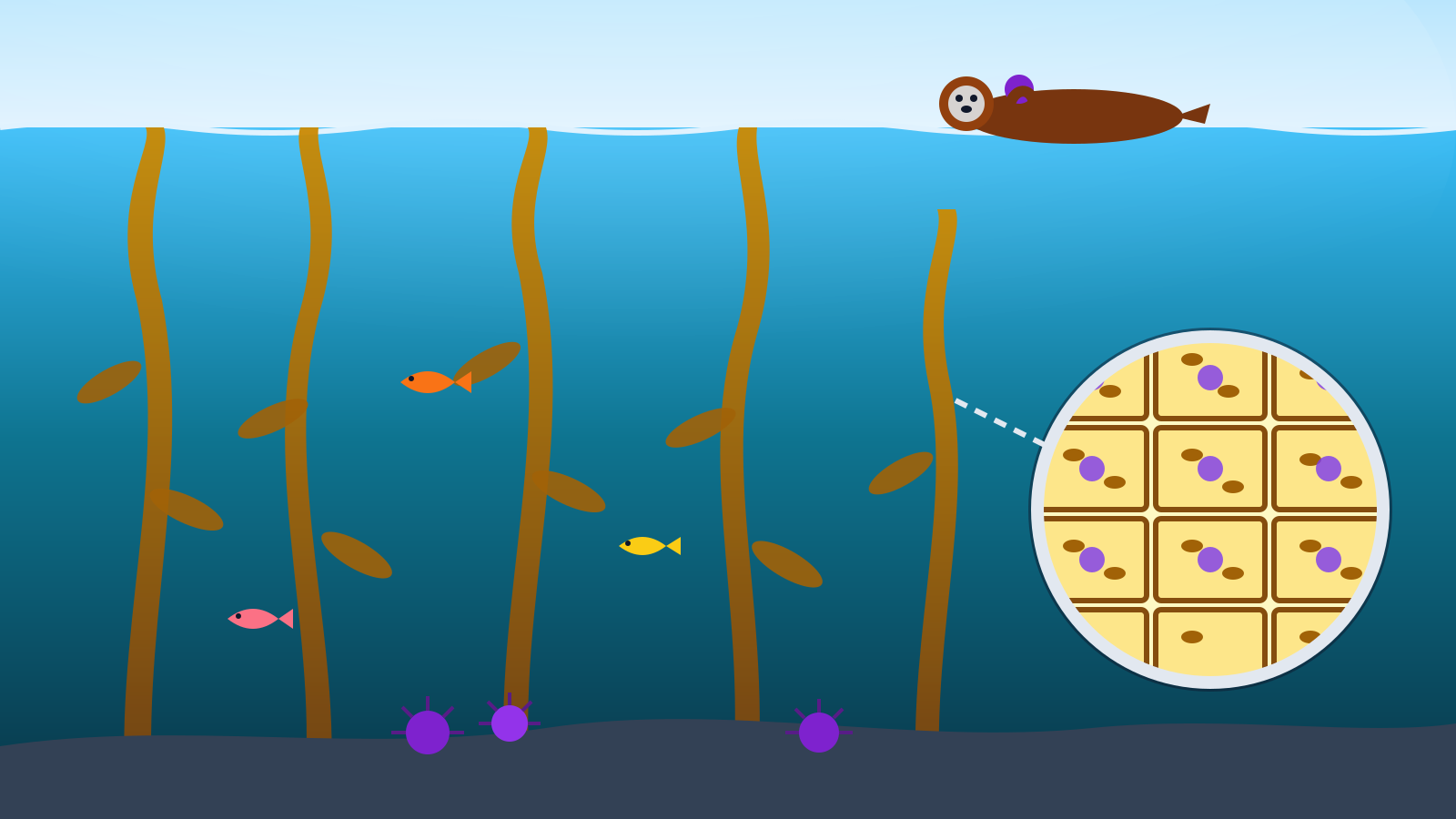
Sea otters eat sea urchins, and urchins eat kelp. Pick a change and follow it through the food web.
- Sea otters: ▼ fewer
- Sea urchins: ▲ more
- Kelp: ▼ fewer
- Fish: ▼ fewer
With no otters to eat them, urchins multiply and mow down the kelp. Fish lose their food and shelter. This happened along the Pacific coast when otters were hunted for fur.
Key words
- Food web: all the food chains in an ecosystem linked together, showing how energy moves.
- Population: all the members of one species living in one area.
- Predator and prey: a predator hunts and eats other animals, its prey.
- Keystone species: a species that holds a food web together, like sea otters in a kelp forest.
Big mistake to avoid
Thinking a change only affects the two species involved. Removing sea otters does not just help urchins. Urchins then eat the kelp, and every fish, snail and seal that lived in the kelp forest loses its home.
Cool science secret
Sea otters eat about a quarter of their body weight in food every day, mostly urchins, crabs and clams. That huge appetite is what keeps kelp forests standing.
Try it yourself
A disease kills most of the foxes that eat rabbits in a meadow. Predict what happens to the rabbits and then to the grass.
Answer: rabbits increase because fewer are eaten, and then the grass decreases because more rabbits eat it.
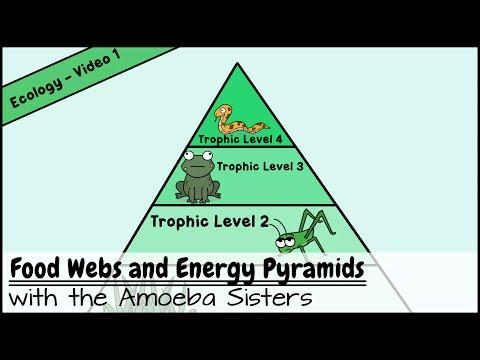
Food Webs and Energy Pyramids: Amoeba Sisters
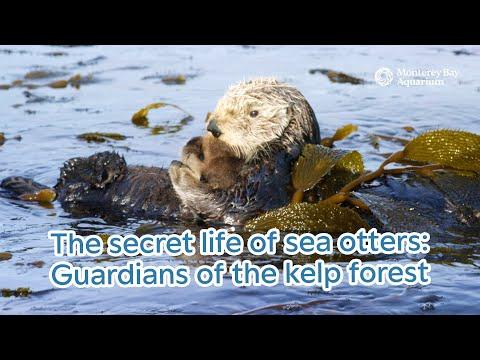
Sea otters: guardians of the kelp forest