Cell Theory
All living things are made of one or more cells. Cell theory is one of the most important ideas in biology and has three main parts:
1. All living organisms are composed of one or more cells.
2. The cell is the basic unit of structure and organization in organisms.
3. All cells arise from pre-existing cells.
Prokaryotic vs. Eukaryotic Cells
• Prokaryotic cells (bacteria and archaea) are simpler; they have no nucleus and no membrane-bound organelles. Their DNA floats freely in the cytoplasm.
• Eukaryotic cells (plants, animals, fungi, protists) are more complex; they have a nucleus that contains their DNA and many specialized organelles.
Key Cell Parts
• Cell membrane: the outer boundary that controls what enters and leaves the cell
• Nucleus: the "control center" containing DNA (eukaryotic cells only)
• Mitochondria: the "powerhouse of the cell," converts food into energy (ATP)
• Ribosomes: make proteins by reading instructions from DNA
• Cytoplasm: the jelly-like fluid filling the cell
• Cell wall: a rigid outer layer found in plant cells, bacteria, and fungi (not in animal cells)
• Chloroplasts: found in plant cells; capture sunlight for photosynthesis
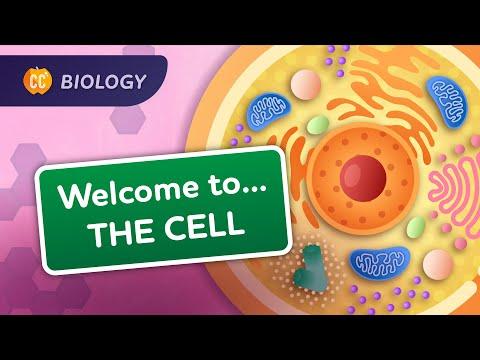
A Tour of the Cell: Crash Course Biology #23