
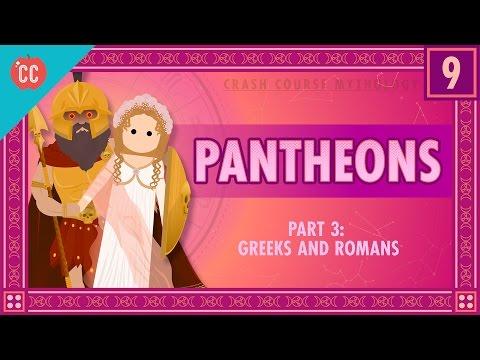
The Olympians: the gods of Mount Olympus
The Greeks were polytheistic, they worshipped many gods, and the most powerful ruled from the top of Mount Olympus, Greece's highest peak. Crucially, these gods looked and behaved like humans: they married, argued, cheated, and played favorites. They were simply immortal and vastly powerful, and each one controlled a piece of the world.
• Zeus: king of the gods, lord of the sky, hurler of thunderbolts.
• Hera: queen of the gods, goddess of marriage, famous for her jealousy.
• Poseidon: god of the sea and earthquakes, and the villain of the Odyssey.
• Athena: goddess of wisdom and strategy; the city of Athens bears her name.
• Apollo: god of the sun, music, and prophecy.
• Artemis: goddess of the hunt and the moon, Apollo's twin.
• Aphrodite: goddess of love and beauty; her promise to Paris is part of the Trojan War's cause.
• Ares: god of war's rage, the opposite of Athena's strategy.
• Hermes: messenger of the gods and guide of travelers and souls.
• Hephaestus: god of fire and metalwork, the smith of Olympus.
• Demeter: goddess of grain; her grief when Persephone is taken is the Greek story of winter.
• Hestia: goddess of the hearth. Some later lists replace her with Dionysus, god of wine and theater. Both counts of the twelve are ancient.
One famous god is usually not counted among the twelve: Hades, ruler of the Underworld, who rarely leaves it. Half the fun of mythology is keeping track of who rules what, and who is feuding with whom.
Through-line
In one sentence, what kind of beings are the Olympians, and why does that matter?
Finish this section first, then write one sentence in your own words.