Loading...
Attack on Pearl Harbor
December 7, 1941Pearl Harbor, Hawaiihigh importance
Japan attacked the U.S. naval base at Pearl Harbor, bringing America into World War II.
Where this fits on the timeline. For the first two years of World War II, the United States stayed on the sidelines while Germany conquered much of Europe and Japan expanded across Asia and the Pacific. That ended in a single morning. On December 7, 1941, Japan attacked the American naval base at Pearl Harbor in Hawaii, and the next day the United States was at war. Pearl Harbor is the event that pulled America into the deadliest conflict in history, the war that would later be decided on the beaches of D-Day and in the skies over Hiroshima.
Why Japan attacked
A collision over oil and empire. Through the 1930s, Japan built an empire by force, invading Manchuria and then launching a full-scale war in China. To pressure Japan to stop, the United States cut off exports Japan needed, and in the summer of 1941 President Franklin D. Roosevelt froze Japanese assets and choked off the oil shipments that supplied roughly 80 percent of Japan's oil. Japan's leaders felt cornered. Rather than give up their conquests, they gambled on a surprise blow to cripple the U.S. Pacific Fleet, hoping to buy time to seize the oil and resources of Southeast Asia before America could recover.
The morning of December 7
Sunday, out of a clear sky. Admiral Isoroku Yamamoto's plan sent six aircraft carriers across some 3,000 miles of open ocean in complete secrecy. Just before 8:00 a.m., the first of about 353 Japanese planes roared over the harbor in two waves. The lead pilot radioed the coded signal 'Tora! Tora! Tora!', the message that complete surprise had been achieved. Torpedo bombers and dive-bombers tore into 'Battleship Row.' The battleship USS Arizona exploded when a bomb set off its forward ammunition magazine, killing 1,177 of her crew in an instant, about half of all the Americans who died that day. The USS Oklahoma was hit by torpedoes and capsized. Most American aircraft, parked wingtip-to-wingtip, were destroyed on the ground before they could take off.
Counting the losses
A terrible tally in under two hours. The attack lasted only about an hour and fifteen minutes, yet it killed about 2,403 Americans and wounded roughly 1,100 more. Around nineteen U.S. ships were sunk or damaged, including eight battleships, and well over a hundred aircraft were destroyed. As with many battles, the exact counts vary slightly from source to source, a reminder that behind each number was a person. For the United States it was the most shocking attack on its own forces in living memory.
The blow that missed
Why Pearl Harbor was not the knockout Japan wanted. For all its damage, the attack failed to destroy the targets that mattered most for a long war. The U.S. aircraft carriers were out at sea that morning and survived, and they would prove decisive in the Pacific. The Japanese also left the base's fuel-storage tanks and repair yards largely intact, which let the Americans rebuild with surprising speed. Most of the sunken and damaged ships were later raised and returned to service. Japan had wounded the fleet, but not killed it.
'A date which will live in infamy'
From shock to a declaration of war. The next day, December 8, 1941, President Roosevelt stood before Congress and called December 7 'a date which will live in infamy.' Within the hour, Congress declared war on Japan with only a single dissenting vote. Three days later, on December 11, Japan's allies Germany and Italy declared war on the United States, and America was now fully in the war in both Europe and the Pacific. Almost overnight, a divided, isolationist nation united behind the war effort.
Living voices from that day
The attack came into American homes by radio. Most Americans first learned of Pearl Harbor not from a newspaper but from urgent radio bulletins that broke into Sunday-afternoon programs, so that people would forever remember exactly where they were when they heard the news. The next day they gathered around their radios again to hear President Roosevelt's steady voice ask Congress for a declaration of war, while Navy and newsreel cameras captured the burning harbor and the USS Arizona ablaze. Watching and listening to these primary sources is the closest we can come to standing in that Sunday morning.
How Pearl Harbor is remembered
Honoring the fallen. Among the many acts of courage that day was that of Doris 'Dorie' Miller, a Navy cook aboard the USS West Virginia who, with no gunnery training, manned an anti-aircraft gun and helped carry wounded sailors to safety; he became the first African American awarded the Navy Cross. Today the sunken hull of the USS Arizona rests where she fell, beneath a memorial in the harbor, and droplets of oil still rise to the surface from the wreck, sometimes called the 'tears of the Arizona.' Pearl Harbor set the United States on the long road that would lead, three and a half years later, to victory in World War II.
Related on StudyQuest
Learn more
Additional references
Further reading
Recommended, age-appropriate books to explore this further. Links open a library catalog search.
Key Takeaways
1
Japan attacked Pearl Harbor on December 7, 1941, bringing the United States into World War II
2
The U.S. oil embargo, meant to stop Japanese expansion, helped push Japan toward war
3
About 353 Japanese planes struck in two waves; the USS Arizona exploded, killing 1,177 of her crew
4
Around 2,403 Americans were killed and roughly 19 ships were sunk or damaged (figures are estimates)
5
The U.S. aircraft carriers were at sea and survived, and the fuel and repair facilities were left intact
6
FDR called it "a date which will live in infamy"; Congress declared war, and Germany and Italy then declared war on the U.S.
Key Figures
Related Videos
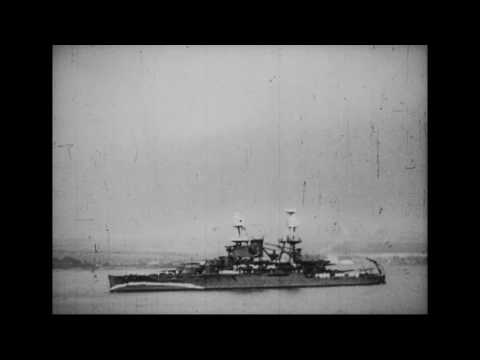
Japanese Planes Bomb Pearl Harbor; USS Arizona Sinks
U.S. National Archives · 2:55
WNYC Radio Announces the Attack on Pearl Harbor (1941)
WNYC · 1:33
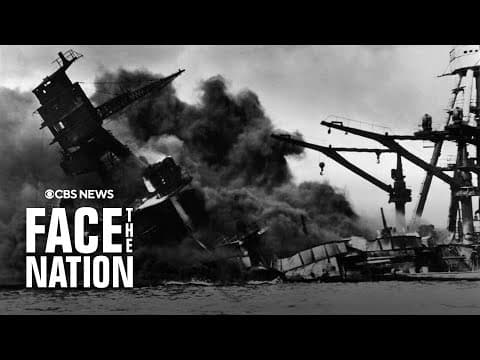
1941 CBS News Radio Bulletin: Attack on Pearl Harbor
CBS News (Face the Nation) · 3:48
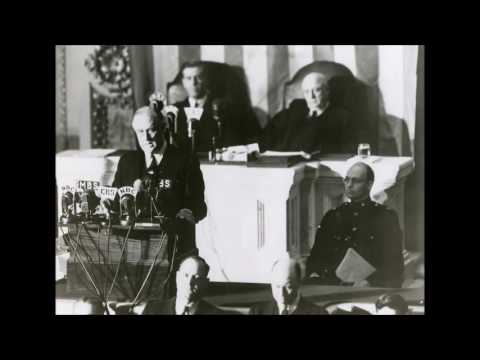
FDR’s “Day of Infamy” Address to Congress (Dec 8, 1941)
FDR Presidential Library · 7:41
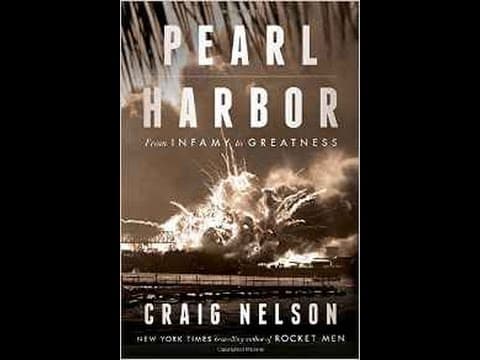
Pearl Harbor: From Infamy to Greatness (Author Talk)
U.S. National Archives · 1:02:20