Loading...
Battle of Antietam (Sharpsburg)
September 17, 1862Sharpsburg, Marylandhigh importance
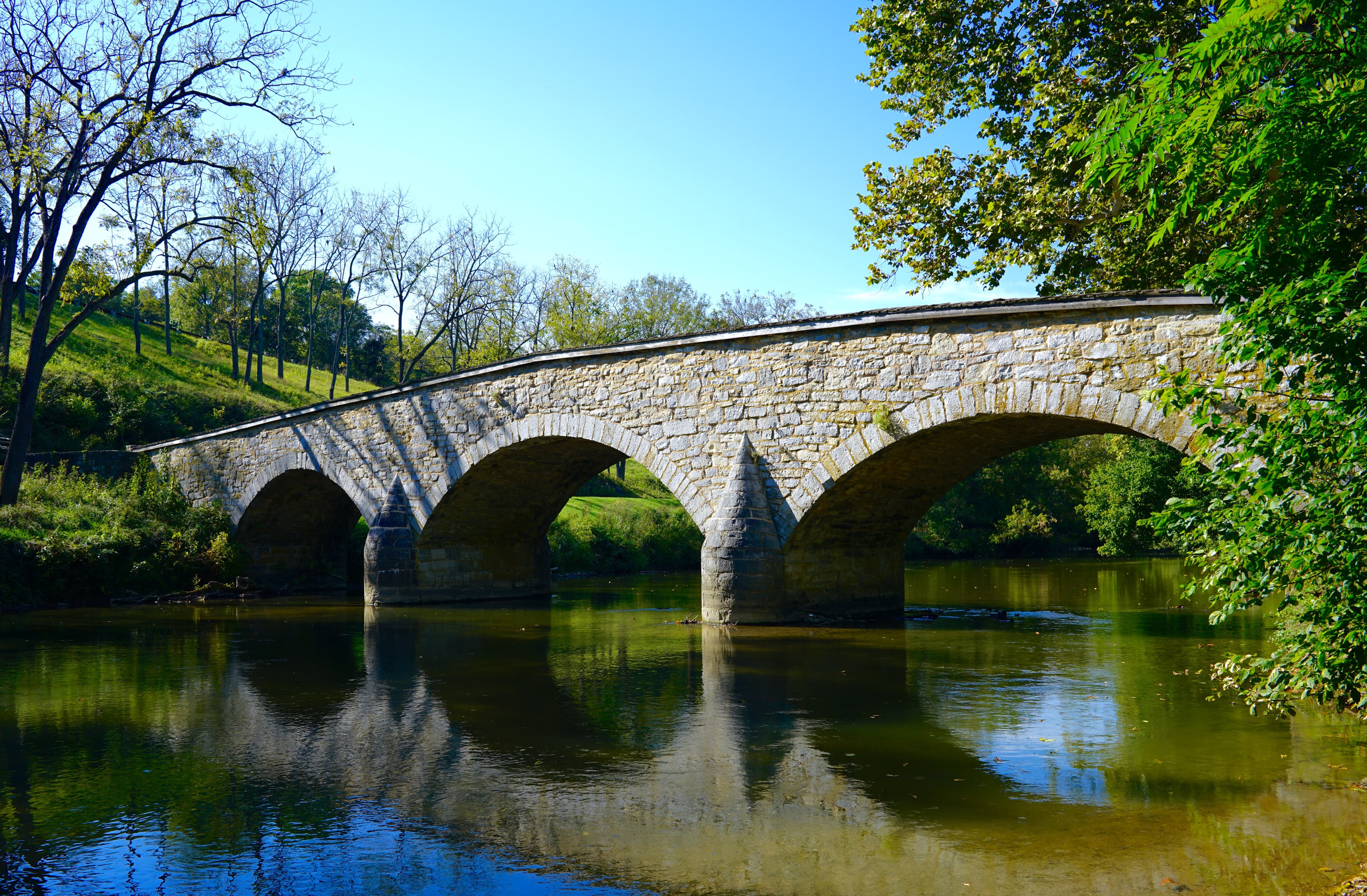
The bloodiest single day in American military history; Union victory gave Lincoln the opening to issue the Emancipation Proclamation.
Where this fits on the timeline. In the summer of 1862 the Confederacy was winning in the East. Robert E. Lee had driven the Union army away from Richmond in the Peninsula Campaign and routed another at Second Bull Run. In September he marched north into Maryland to win a victory on Union soil, feed his army, and perhaps bring Britain and France into the war. He met the Union army along Antietam Creek near Sharpsburg on September 17, 1862, in the bloodiest single day in American history, a turning point of the Civil War even though neither side won it outright.
The lost orders
A copy of Lee's plan wrapped around three cigars. Lee had split his army, sending Stonewall Jackson to capture the Union garrison at Harpers Ferry while the rest moved north. On September 13, Union soldiers resting in a field found a copy of Lee's Special Orders No. 191 and passed it up to General George McClellan, who now knew exactly how scattered his enemy was. McClellan moved, but slowly. Lee had time to pull his army together behind the creek, and Jackson's men, marching all night from Harpers Ferry, arrived just as the fighting began.
Three battles in one day
The Cornfield, the Sunken Road, and Burnside's Bridge. McClellan attacked piecemeal from north to south. At dawn Union troops under Joseph Hooker swept into a thirty-acre cornfield that changed hands so many times that Hooker wrote afterward that every stalk had been cut down as if with a knife. At midday Union columns assaulted a sunken farm lane held by Confederates, which became the Bloody Lane when the defenders were finally driven out and their dead lay in rows. In the afternoon Ambrose Burnside's corps spent hours forcing a stone bridge across the creek that was defended by a few hundred Georgians, then pushed toward Sharpsburg until A. P. Hill's division, arriving from Harpers Ferry, hit their flank and stopped them. By dark about 23,000 men were dead, wounded, or missing, more than 3,600 of them killed. Lee, outnumbered two to one, held his ground the next day and then slipped back across the Potomac. McClellan, who had kept a third of his army out of the fight, did not pursue.
Why a draw changed the war
Lincoln had been waiting for a victory to act. He had drafted the Emancipation Proclamation in July but agreed with his cabinet that issuing it after a string of defeats would look like desperation. Five days after Antietam he released the preliminary proclamation, warning that enslaved people in any state still in rebellion on January 1, 1863 would be free. Britain and France, which had been edging toward recognizing the Confederacy, stepped back. In November Lincoln removed McClellan for good. And when Alexander Gardner's photographs of the dead at Antietam went on display in New York in October, civilians saw for the first time what a battlefield looked like; one reviewer wrote that Gardner had laid the bodies in their dooryards.
Further reading
The battlefield is one of the best preserved in the country. Antietam National Battlefield offers a driving tour of the Cornfield, the Sunken Road, and the bridge, and its history pages cover the campaign. The American Battlefield Trust has animated maps. Stephen Sears's Landscape Turned Red is the classic account. Continue to Fredericksburg, where the Union paid for its next attack.
Related on StudyQuest
Learn more
Additional references
Further reading
Recommended, age-appropriate books to explore this further. Links open a library catalog search.
Landscape Turned Red: The Battle of Antietam
by Stephen W. Sears
The classic narrative of the campaign and the battle; for grades 10 to 12.
The Boys' War: Confederate and Union Soldiers Talk About the Civil War
by Jim Murphy
What the war was like for the teenagers who fought it, in their own letters; for grades 6 to 9.
Key Takeaways
1
Deadliest single day of combat in U.S. history
2
Union held the field; Lee retreated to Virginia
3
Opened the political path to the Emancipation Proclamation
Key Figures
Related Videos
The Civil War Animated Map
American Battlefield Trust · 27:28