Loading...
First Battle of Bull Run (Manassas)
July 21, 1861Manassas, Virginiahigh importance
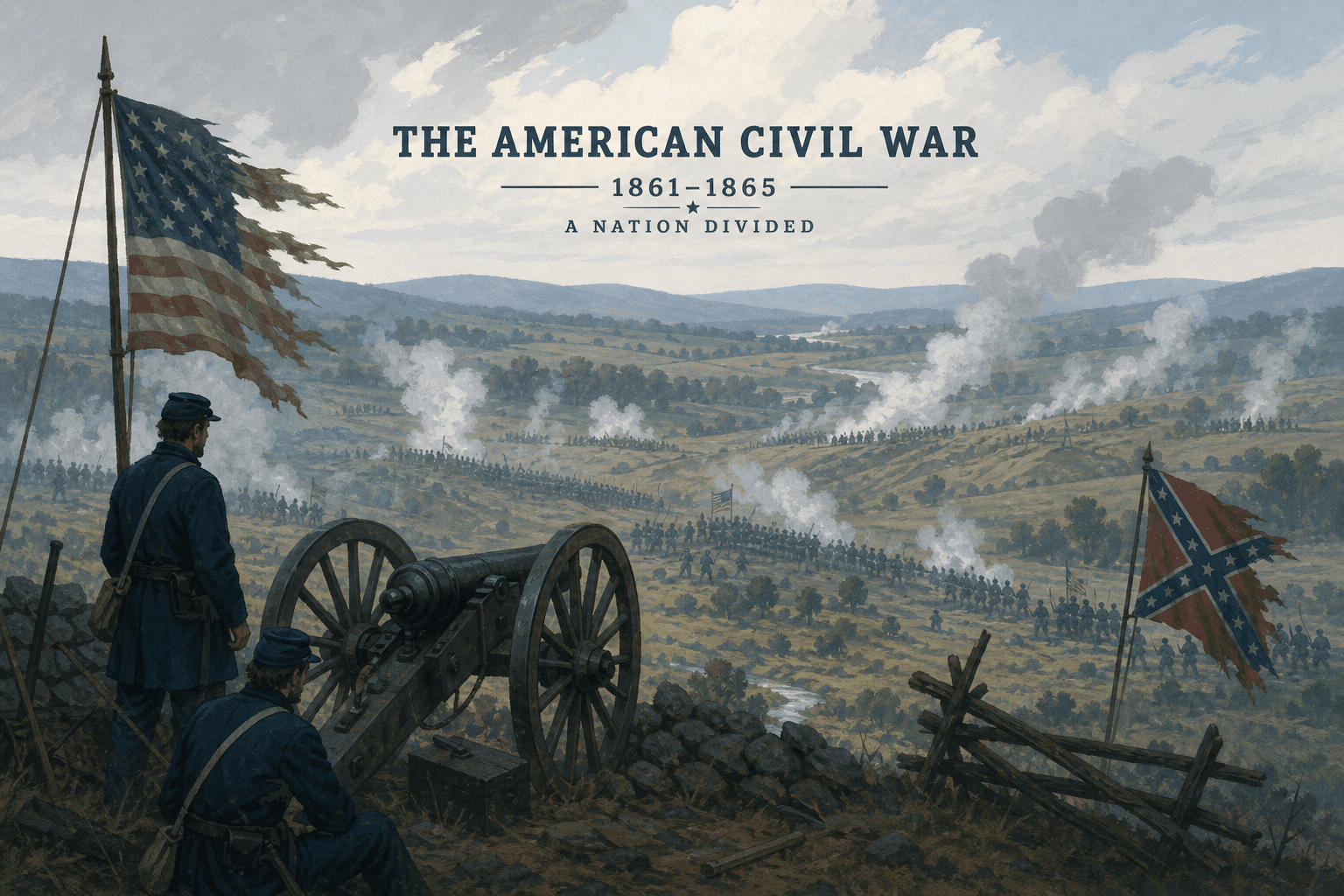
The first major land battle of the Civil War shocked both sides and proved the war would be long and bloody.
Where this fits. Fort Sumter had fired up the war in April 1861. By July 21, both sides still believed one big battle might decide everything. They were wrong.
Picnic expectations. Many Northerners expected a quick Union victory near Manassas Junction, Virginia, only about 25 miles from Washington. Civilians rode out with picnic baskets to watch. They learned the hard way that war is not a parade.
Green armies clash. Union General Irwin McDowell marched inexperienced troops toward Confederate forces under Pierre G. T. Beauregard. Confederate General Joseph E. Johnston rushed reinforcements from the Shenandoah Valley by railroad, one of the first times trains shifted an entire battle. Fighting swirled around Henry House Hill and the stone bridge over Bull Run.
Stonewall stands firm. Brigadier General Thomas J. Jackson earned the nickname Stonewall when his Virginia brigade held a critical line under heavy fire. That moment became Confederate legend.
Union retreat. By afternoon, Union lines broke. Soldiers and spectators fled back toward Washington in confusion. Roughly 900 men were killed on both sides, with thousands more wounded or missing.
Why it mattered. Bull Run destroyed the illusion of a ninety-day war. President Lincoln called for 500,000 more volunteers and signed legislation to build a long war machine. Both armies spent the next year training for brutal campaigns such as the Peninsula and Antietam.
Related on StudyQuest
Key Takeaways
1
First major land battle showed both armies were unprepared for a long war
2
Confederate rail movement and Jackson’s defense were early strategic lessons
3
Northern overconfidence collapsed; Lincoln expanded the Union war effort