Loading...
Declaration of Independence
July 4, 1776Philadelphia, Pennsylvaniahigh importance
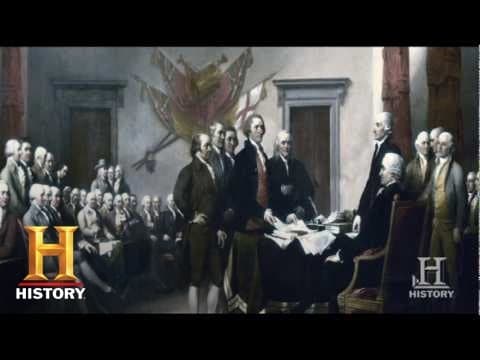
On July 4, 1776, the Second Continental Congress adopted the Declaration of Independence, publicly announcing that the thirteen colonies were breaking away from Britain to become free and independent states.
Where this fits on the timeline. Fighting had already begun at Lexington and Concord in April 1775, but for more than a year most colonists still hoped to patch things up with Britain. The Declaration, in July 1776, is the moment they stopped asking for fair treatment inside the British Empire and started fighting to leave it. The war it justified would be won at Yorktown in 1781, and the country it created would later design its government at the Constitutional Convention in 1787.
Two dates: July 2 and July 4
The vote came first. On June 7, 1776, Richard Henry Lee of Virginia stood up in the Second Continental Congress in Philadelphia and moved that the colonies 'ought to be free and independent States.' After weeks of debate, Congress voted to approve the Lee Resolution on July 2, 1776. Twelve colonies voted yes; New York's delegates had no instructions from home and abstained, approving a week later. That July 2 vote is the actual legal break with Britain.
So why do we celebrate July 4? Because that is the day Congress approved the final wording of the document that explained the decision to the world. John Adams was so sure July 2 would be the famous date that he wrote to his wife Abigail that it 'will be celebrated by succeeding Generations as the great anniversary Festival.' He was right about the celebration and off by two days about the date.
Who wrote it
A committee, then one young Virginian. On June 11, 1776, Congress appointed a Committee of Five to write the Declaration: Thomas Jefferson (Virginia), John Adams (Massachusetts), Benjamin Franklin (Pennsylvania), Roger Sherman (Connecticut), and Robert R. Livingston (New York). The committee handed the job to the 33-year-old Jefferson, who was known for his clear, powerful writing. Adams and Franklin suggested edits to his draft, and then Congress itself made more, cutting roughly a quarter of Jefferson's words. In all, the text went through about 86 changes before it was adopted. Jefferson quietly resented every cut.
What the Declaration actually says
Four parts, one argument. The Declaration is short, but it is carefully built in four pieces. It opens with an introduction explaining that a people who separate owe the world an explanation of their reasons. Next comes the famous statement of principles about human rights. Then it lists about 27 grievances, specific complaints against King George III, most of them beginning with the words 'He has.' Finally, it makes the formal declaration of independence, announcing that the colonies are now 'Free and Independent States' with the power to make war, sign treaties, and trade on their own.
The most famous sentence in American history sits at the start of the second part: 'We hold these truths to be self-evident, that all men are created equal, that they are endowed by their Creator with certain unalienable Rights, that among these are Life, Liberty and the pursuit of Happiness.' The idea that people have rights simply because they are human, and that governments get their 'just powers from the consent of the governed,' came largely from the English philosopher John Locke and his theory of the social contract: government is a deal between the people and their rulers, and a government that breaks the deal can be replaced.
The promise and the contradiction
'All men are created equal', in a country that allowed slavery. When Jefferson wrote that line, slavery was legal in all thirteen colonies, and Jefferson himself enslaved hundreds of people. His original draft even included a passage blaming the King for the slave trade, but Congress struck it out to keep the support of slaveholding colonies. The gap between the Declaration's promise of equality and the reality of slavery is one of the most important tensions in American history, and later generations would hold the country to the words it had written down.
Signing and spreading the news
Not signed all at once. A common myth is that the delegates all signed on July 4. In fact, most signed a carefully handwritten (engrossed) copy on parchment on August 2, 1776, and a few added their names even later. In the end there were 56 signers. John Hancock, the president of Congress, signed first and largest, at the top center, so 'the King of England could read it without his spectacles.' The youngest signer was Thomas Lynch Jr. of South Carolina at 26; the oldest was Benjamin Franklin at 70.
Getting the word out. On the night of July 4 into July 5, the printer John Dunlap ran off the first printed copies, known today as the Dunlap broadsides. Riders carried them to the colonies and to the army. The Declaration was first read aloud in public on July 8, 1776, in the yard of the Pennsylvania State House in Philadelphia, to cheering crowds and ringing bells.
Its long shadow
A yardstick for later movements. The Declaration's language outlived the war. In 1848, at the Seneca Falls Convention, Elizabeth Cady Stanton borrowed its form for the 'Declaration of Sentiments,' rewriting the famous line as 'all men and women are created equal.' In 1863, Abraham Lincoln opened the Gettysburg Address with 'Four score and seven years ago', counting back 87 years to 1776, and reminded the nation that it was founded on the idea that 'all men are created equal.' Abolitionists and later the civil rights movement used the same words to argue that the country had not yet lived up to its own founding promise.
A strange coincidence. Both Thomas Jefferson and John Adams, the Declaration's author and its fiercest champion in Congress, died on the same day: July 4, 1826, exactly fifty years after its adoption. Adams's reported last words were 'Thomas Jefferson survives', though Jefferson had died a few hours earlier.
250 years on. In 2026, the United States marks the Semiquincentennial, the 250th anniversary of the Declaration. The original parchment, faded now, is displayed at the National Archives in Washington, D.C., where it remains one of the most visited documents in the world.
Related on StudyQuest
Learn more
Key Takeaways
1
Congress voted for independence on July 2, 1776, and adopted the Declaration’s final wording on July 4, 1776
2
A Committee of Five drafted it, but Thomas Jefferson was the principal author; Congress cut about a quarter of his text
3
It grounds government in natural rights and the “consent of the governed,” ideas drawn largely from John Locke
4
It lists about 27 grievances against King George III to justify the break with Britain
5
Most of the 56 delegates signed the parchment on August 2, 1776, not July 4
6
Its promise that “all men are created equal” later fueled the fights against slavery and for equal rights, even though slavery was legal in 1776
Key Figures
Related Videos
What You Might Not Know About the Declaration of Independence
TED-Ed · 4:40