Loading...
Raid on Harpers Ferry
October 16, 1859Harpers Ferry, Virginia (now West Virginia)high importance
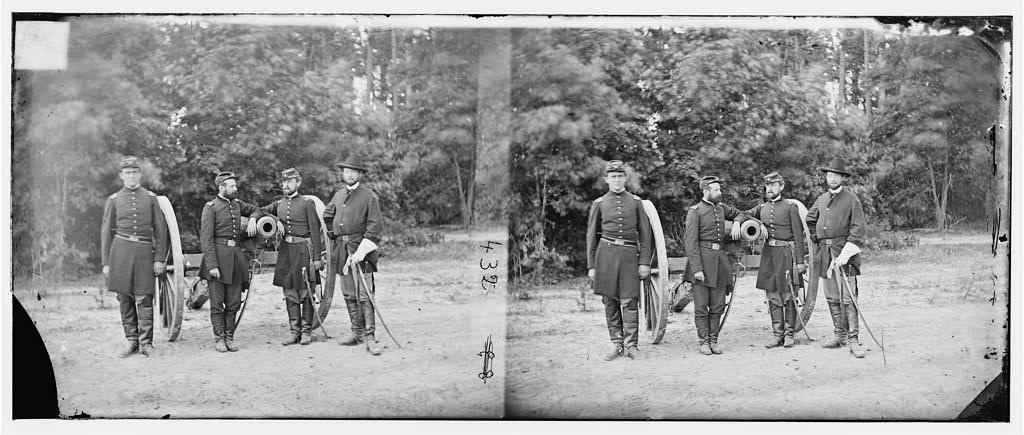
In October 1859 John Brown seized the federal armory at Harpers Ferry, Virginia, to start a war on slavery; the raid failed in 36 hours but shook the nation.
Where this fits on the timeline. Late on the night of Sunday, October 16, 1859, John Brown led a small band of armed men across a bridge into Harpers Ferry, Virginia. They came to seize the federal armory, arm enslaved people and start a war against slavery. The raid collapsed in about 36 hours, but its shock waves helped split the country. It came three years after Brown's Pottawatomie killings in Kansas and a year before the election of 1860, and many historians see it as a turning point on the road to war.
The plan
Why Harpers Ferry. The town sat where the Potomac and Shenandoah rivers meet, about 60 miles from Washington, D.C. It held a U.S. armory and arsenal stocked with thousands of rifles and muskets. Brown planned to seize the weapons, call enslaved people from nearby farms to join him, and retreat into the Appalachian Mountains, from which a growing force would raid plantations, free more people and push south.
Supporters and doubters. Brown had prepared for years. In 1858 he held a meeting in Chatham, in what is now Ontario, Canada, where supporters adopted a "Provisional Constitution" for the free government he imagined. A group of Northern abolitionists later known as the "Secret Six" quietly gave him money. He tried hard to recruit Frederick Douglass, but at a meeting in a stone quarry near Chambersburg, Pennsylvania, in August 1859, Douglass warned that attacking federal property would turn the nation against them, and he declined. Shields Green, a freedom seeker who came with Douglass, chose to join Brown. Harriet Tubman helped Brown make contacts and find recruits, but she did not take part in the raid.
The raiders. In the summer of 1859, Brown rented the Kennedy Farm in Maryland, about five miles from Harpers Ferry, and gathered his men there. His 21 followers included three of his sons and five Black men: Dangerfield Newby, Lewis Leary, John Copeland, Shields Green and Osborne Perry Anderson. Newby hoped to free his wife and children, who were enslaved in Virginia.
October 16 to 18, 1859
A quick start. Leaving three men at the farm to guard supplies, Brown led the rest across the Potomac bridge. They cut telegraph wires, captured the armory and arsenal, and took hostages, including Lewis Washington, a great-grandnephew of George Washington. From his home they took a sword said to have been a gift to the first president from Frederick the Great of Prussia. A few enslaved men from the hostages' farms were brought along.
The first death. When a train stopped at the bridge after midnight, Heyward Shepherd, a free Black railroad baggage master, went to see what was wrong and was shot; he died hours later. The first person killed in a raid meant to free enslaved people was a free Black man. Brown then let the train go on, and its crew spread the alarm.
Trapped. By the morning of October 17, armed townspeople were firing on the raiders and militia companies were pouring in from Virginia and Maryland. The town's mayor, Fontaine Beckham, was killed. Instead of retreating to the mountains while he still could, Brown waited, and his escape routes were cut off. He, his remaining men and some hostages barricaded themselves in the armory's brick fire-engine house, now known as John Brown's Fort. The great uprising Brown hoped for never came.
The Marines storm the engine house. That night about 90 U.S. Marines arrived from Washington under the command of Robert E. Lee, then a U.S. Army officer. At dawn on October 18, Lieutenant J.E.B. Stuart carried a demand for surrender to the door, and Brown refused. Marines led by Lieutenant Israel Greene broke in using a ladder as a battering ram, and the fight was over in about three minutes. Brown was wounded and captured.
The toll. Ten of Brown's men were killed, including his sons Watson and Oliver. Five escaped, among them Owen Brown and Osborne Perry Anderson, who later published an account of the raid. Seven, including Brown, were eventually captured, tried and hanged. Four townspeople and one Marine were also killed.
Trial and execution
"His despised poor." Virginia tried Brown quickly in Charles Town for treason against the Commonwealth of Virginia, conspiring with enslaved people to rebel, and murder. Still recovering from his wounds, he lay on a cot during parts of the trial. The jury found him guilty on October 31. At his sentencing on November 2, Brown told the court he had acted on behalf of God's "despised poor" and that what he had done was "not wrong, but right."
December 2, 1859. Brown was hanged at Charles Town. Among the troops guarding the scaffold were cadets from the Virginia Military Institute and their professor Thomas J. Jackson, later known as "Stonewall," and a young actor named John Wilkes Booth stood in the ranks of a Richmond militia company. That morning Brown handed a guard a note: "I, John Brown, am now quite certain that the crimes of this guilty land will never be purged away but with blood."
North and South react
Martyr or murderer. In parts of the North, church bells tolled on the day of the execution, and writers such as Henry David Thoreau and Ralph Waldo Emerson praised Brown's courage. Many other Northerners, including most Republican leaders, condemned the raid. In his Cooper Union speech of February 1860, Abraham Lincoln called it wrong and insisted that "John Brown was no Republican."
Southern fear. In the South, the raid confirmed the deepest fear of slaveholding society, an armed revolt of enslaved people, a fear that reached back to uprisings like the Stono Rebellion of 1739. Southern states strengthened their militias, and many white Southerners came to believe that Republicans secretly supported Brown. That belief helped drive the Deep South toward secession after Lincoln's election. When the Civil War began, Union soldiers marched to the song "John Brown's Body," whose tune later carried the "Battle Hymn of the Republic."
Why it matters
A rehearsal for war. The raid failed as a military plan, but it changed the national mood. Northerners and Southerners looked at the same event and saw a martyr or a terrorist, and that gap could no longer be closed by compromise. Historians still debate how to judge Brown, but most agree that Harpers Ferry made the crisis of 1860 and 1861 sharper and more dangerous. Follow the story through the Slavery & Sectional Crisis and Civil War journeys, and review it for the U.S. History final.
Common mix-ups
Harpers Ferry was in Virginia. Today Harpers Ferry is in West Virginia, but that state did not exist until 1863. In 1859 the raid took place in Virginia, which is why Virginia tried Brown for treason against the state.
Robert E. Lee was a U.S. officer at the time. Lee commanded the federal Marines who captured Brown. He did not join the Confederacy until Virginia seceded in 1861.
There was no mass uprising. Brown expected enslaved people to rise and join him by the hundreds. Only a few joined, and historians debate how many did so willingly.
Check your understanding
1. What did John Brown hope to accomplish at Harpers Ferry? He wanted to seize the federal weapons there, arm enslaved people, and start a spreading armed revolt against slavery from the Appalachian Mountains.
2. How did the raid end? On October 18, 1859, U.S. Marines commanded by Robert E. Lee stormed the engine house, killing or capturing the remaining raiders and wounding and capturing Brown.
3. Why did the raid push the country closer to civil war? Many Northerners honored Brown as a martyr, while many Southerners saw the raid as proof that Republicans and the North supported slave revolt, which hardened both sides before the election of 1860.
Related on StudyQuest
Learn more
Key Takeaways
1
On the night of October 16, 1859, John Brown and his followers seized the U.S. armory and arsenal at Harpers Ferry, Virginia, planning to arm enslaved people and start a revolt.
2
Brown's 21 followers included three of his sons and five Black men; Frederick Douglass refused to join, warning that the plan was doomed.
3
Few enslaved people joined, and local militia trapped the raiders in the armory's engine house, now called John Brown's Fort.
4
On October 18, U.S. Marines commanded by Robert E. Lee stormed the engine house; ten raiders were killed, including two of Brown's sons, and Brown was captured.
5
Virginia convicted Brown of treason, conspiring with enslaved people to rebel, and murder, and hanged him at Charles Town on December 2, 1859.
6
Many Northerners treated Brown as a martyr while many Southerners saw the raid as proof of a Northern plot, deepening the divide before the election of 1860.
Key Figures
Related Videos
The Election of 1860 & the Road to Disunion: Crash Course US History #18
CrashCourse · 14:16