Loading...
Sack of Rome (410 CE)
410-08-24Rome, Italyhigh importance
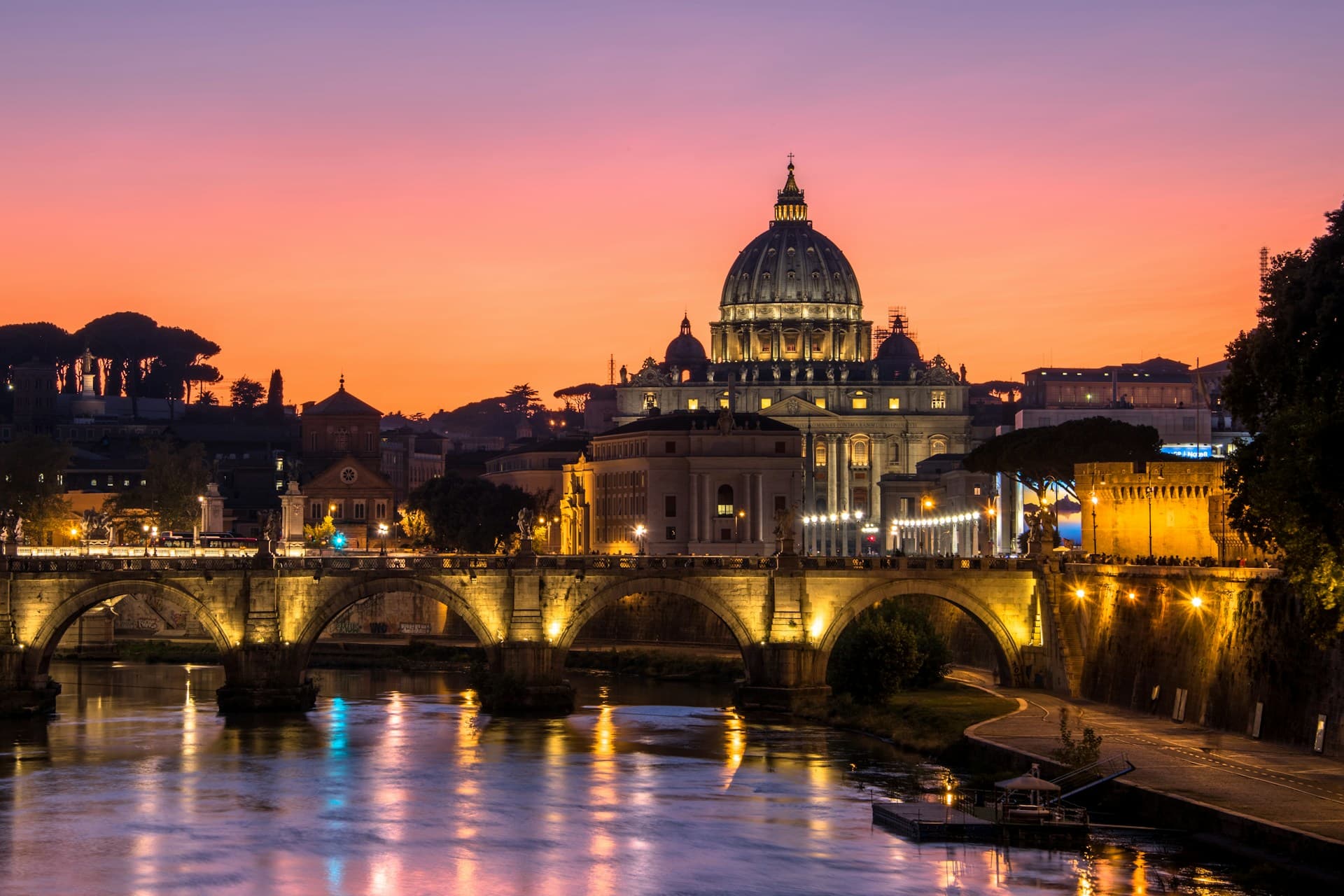
On August 24, 410, Alaric's Goths broke into Rome and looted it for three days, the first foreign capture of the city in about 800 years.
Where this fits on the timeline. Rome had not fallen to a foreign enemy in about 800 years, not since an army of Gauls sacked the city around 390 BCE, when it was still a young republic. Romans told of their city's founding in 753 BCE and called it eternal. Under its first emperor, Augustus, it had begun two centuries of relative peace known as the Pax Romana. Then, on August 24, 410 CE, a Gothic army led by King Alaric marched through the Salarian Gate and spent three days plundering the city. The sack did not end the Western Roman Empire; that came 66 years later with the fall of Rome in 476. But it showed the whole Roman world that the unthinkable could happen.
The Goths and Rome
From refugees to rivals. In the 370s, the Huns pushed west out of Central Asia and drove Gothic peoples to the Danube River, the Roman frontier. In 376, large numbers of Goths were allowed to cross into the empire, but Roman officials mistreated and cheated them, and they rebelled. In 378 they destroyed a Roman army at the Battle of Adrianople and killed the Eastern emperor Valens. Unable to drive them out, Emperor Theodosius I made a treaty in 382 that let the Goths settle inside the empire as allies who fought for Rome under their own leaders.
Who was Alaric? Alaric was a Gothic commander who led Gothic troops for Theodosius, and in 394 his men suffered heavy losses fighting in a Roman civil war. After Theodosius died in 395, the empire was divided between his two young sons: Arcadius ruled the East and Honorius ruled the West. Around that time the Goths chose Alaric as their king. Historians often call his people the Visigoths, though that name came into use later. Like many Goths, Alaric was a Christian who followed Arian Christianity, a version the Roman Church considered heresy. What he wanted was not to destroy Rome but to win a secure place within it: land for his people, food, gold, and an official Roman military command for himself.
Three sieges
A general falls. For years the Western Empire was defended by Stilicho, a talented general whose father was a Vandal. He fought Alaric to a standstill in northern Italy in 402 and at other times bargained with him instead. That same year Honorius moved his court to Ravenna, a city protected by marshes on Italy's northeast coast. But Stilicho had enemies at court, and in August 408 Honorius had him executed. Roman troops then massacred the families of barbarian soldiers serving in Italy, and thousands of those soldiers went over to Alaric.
Pepper and silk as ransom. That autumn Alaric marched on Rome and blockaded it, cutting off its grain. The starving city bought him off. According to the Greek historian Zosimus, the ransom included 5,000 pounds of gold, 30,000 pounds of silver, 4,000 silk tunics, 3,000 scarlet-dyed hides, and 3,000 pounds of pepper, and Romans melted down statues to help pay it. In 409 Alaric besieged the city again and pressured the Senate into accepting a rival emperor, Priscus Attalus, to push Honorius into a deal. When Honorius still refused, Alaric dropped Attalus in 410. Then Sarus, a rival Gothic leader loyal to Honorius, attacked Alaric's camp, and the talks collapsed for good.
Three days in August
Through the Salarian Gate. On August 24, 410, the Goths entered Rome through the Salarian Gate on the city's northeast side. How they got in is uncertain; later stories claimed someone opened the gate from inside. For three days they looted homes and public buildings, carried off treasure, and took captives. Many people were killed or enslaved, and wealthy Romans were held for ransom.
Churches spared. The sack was violent, but it was also limited. Alaric ordered that the great churches of St. Peter and St. Paul be treated as places of sanctuary, and people who fled there were spared. The Christian historian Orosius told of a Goth who found sacred gold and silver vessels belonging to St. Peter's and, on Alaric's orders, had them carried back through the streets in a procession, with Romans and Goths singing hymns side by side. Stories like this were written to show Christian mercy, and historians treat the details with caution, but the damage was far smaller than in many ancient sacks. On the third day, the Goths left.
A royal captive. Among the people the Goths took with them was Galla Placidia, the half-sister of Emperor Honorius. Four years later she married Alaric's successor, his brother-in-law Ataulf.
Aftermath
Alaric's hidden grave. Alaric marched south, planning to cross to Africa, the main source of Rome's grain, but a storm wrecked his ships. Before the end of 410 he fell ill and died near Cosenza in southern Italy. According to the historian Jordanes, his followers turned the Busento River aside, buried him with treasure in the riverbed, and then let the water flow back over the grave. It has never been found.
A new kingdom. Under Ataulf the Goths moved into Gaul. In 418 the Roman government allowed them to settle in southwestern Gaul, where they built a kingdom centered on Toulouse that later spread into Spain.
Shock across the Christian world. The news stunned people far from Italy. In Bethlehem, the scholar Jerome wrote that "the city which had taken the whole world was itself taken." Some Romans who still worshiped the old gods blamed the disaster on Rome's turn to Christianity. In North Africa, Bishop Augustine of Hippo answered them in a huge book, The City of God, begun around 413. He argued that earthly cities like Rome rise and fall, but the city of God lasts forever. The book shaped Christian thinking for more than a thousand years.
Why it matters
A warning sign, not the end. The sack did not topple the government. Honorius stayed safe in Ravenna, and emperors ruled in the West for 66 more years. But it revealed how weak the Western Empire had become. It could not defend its most famous city, could not pay or control the armies it depended on, and was losing its grip on its provinces. In 455 the Vandals sacked Rome again, this time for two weeks, and in 476 the last Western emperor was deposed. The Eastern Empire, ruled from Constantinople, survived for nearly a thousand more years, until the fall of Constantinople in 1453. Explore the whole story in the Ancient Rome journey.
Common mix-ups
The sack of 410 is not the fall of Rome. Alaric looted the city and left; the Western Empire lasted until 476, when the Germanic commander Odoacer deposed the boy emperor Romulus Augustulus. The World History final often tests these two dates.
Rome was no longer the capital. By 410 the Western emperor lived in Ravenna, and before that in Milan. Rome was still a huge city and the symbolic heart of the empire, which is why its capture was so shocking, but the government was elsewhere. A famous story says that when Honorius heard that Rome had perished, he was relieved to learn it meant the city and not his pet chicken named Roma. It comes from the historian Procopius, writing more than a century later, and is almost certainly a legend.
The Goths were not simply invaders from outside. Alaric's people had lived inside the empire for decades, and many had fought for Rome. Much of the conflict was over whether Rome would pay, feed, and honor the soldiers it relied on.
Check your understanding
1. What did Alaric want from the Roman government before he sacked Rome? He wanted land where his people could settle, food and gold, and an official Roman military command, and Emperor Honorius refused to give them.
2. How did Augustine of Hippo respond to the sack? He wrote The City of God, answering those who blamed Christianity and arguing that earthly cities rise and fall while the city of God endures.
3. Why was the sack of 410 so shocking if it did not end the empire? No foreign enemy had captured Rome in about 800 years, so its capture made the Western Empire's weakness plain to everyone.
Related on StudyQuest
Additional references
Key Takeaways
1
On August 24, 410 CE, Gothic forces led by King Alaric entered Rome through the Salarian Gate and looted the city for three days.
2
It was the first time in about 800 years that a foreign enemy had captured Rome, and the news shocked the Roman and Christian world.
3
Alaric wanted land, supplies, gold, and a Roman military command; he besieged Rome in 408 and 409 before Emperor Honorius's refusals led to the sack.
4
Alaric, an Arian Christian, ordered the churches of St. Peter and St. Paul treated as sanctuaries, so the sack was less destructive than many ancient sacks.
5
Augustine of Hippo wrote The City of God in response, answering Romans who blamed the disaster on Rome's turn to Christianity.
6
The sack was not the fall of Rome: the Western Empire lasted until 476, after the Vandals sacked the city again in 455.