Loading...
Lee's Surrender at Appomattox
April 9, 1865Appomattox Court House, Virginiahigh importance
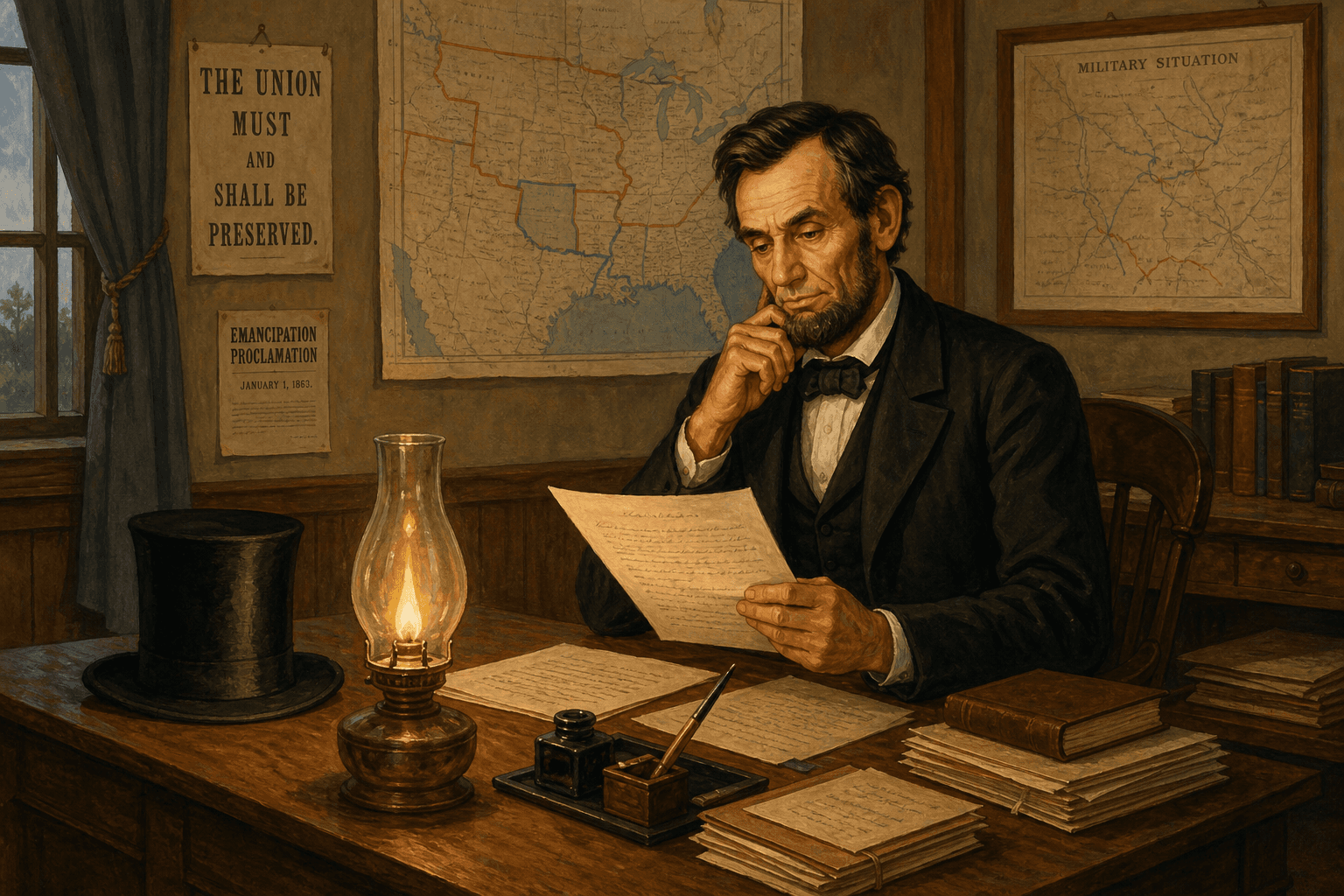
Confederate General Robert E. Lee surrendered to Union General Ulysses S. Grant, effectively ending the Civil War.
Where this fits on the timeline. Four years after the first shots at Fort Sumter, the Confederacy's most important army was trapped in the Virginia countryside. Its surrender at Appomattox Court House on April 9, 1865 did not stop every fight, but it broke the Confederacy's ability to keep fighting and set the pattern for how the war would close: paroles instead of prisons, and no treason trials.
The road to Appomattox
Lee's army was starving, shrinking, and nearly surrounded. When Petersburg and Richmond fell in the first days of April 1865, Robert E. Lee marched the Army of Northern Virginia west, hoping to find supplies and join the Confederate forces in North Carolina. Union cavalry under Philip Sheridan rode ahead to seize the rations and block the roads while Union infantry pressed from behind. At Sailor's Creek on April 6, Lee lost close to a quarter of his remaining men, including several generals. By the night of April 8 the cavalry held the road at Appomattox Station, and a last Confederate attack the next morning found Union infantry lined up behind it. Lee told his officers there was nothing left but to see Grant, adding that he would rather die a thousand deaths.
The meeting at the McLean house
Two generals, one parlor, about ninety minutes. Lee arrived first, in a spotless dress uniform with a ceremonial sword. Ulysses S. Grant, who had been riding for days, came in a mud-spattered field coat with no sword at all. They met in the parlor of Wilmer McLean's home in the village of Appomattox Court House. McLean had moved there after the war's first big battle was fought near his old farm at Manassas, which is why people still say the war began in his front yard and ended in his parlor. The two men talked briefly about the Mexican War, where both had served, before Lee asked Grant to put the terms in writing.
The terms
Generous by design. Grant wrote the terms out himself. Confederate soldiers would stack their arms and go home on parole, not to prison camps. Officers could keep their sidearms, horses, and baggage. When Lee mentioned that his cavalrymen and artillerymen owned their own horses, Grant said he would let every man who claimed a horse or mule take it home for the spring planting. Most important, the paroled men were not to be disturbed by federal authority as long as they kept their paroles and obeyed the law, which in practice ruled out treason trials. Grant also sent rations to the hungry Confederate camps. When Union gunners began firing salutes, Grant stopped them: the war was over, he said, and the rebels were their countrymen again. On April 10 Lee issued his farewell order to the army, and on April 12 the Confederates marched in to stack their arms while the Union troops stood at a salute.
Why the war did not end that day
Appomattox was the decisive surrender, not the last. Other Confederate armies were still in the field. Joseph E. Johnston surrendered to William T. Sherman at Bennett Place, North Carolina, on April 26; the forces west of the Mississippi did not give up until early June; and the news of freedom did not reach enslaved people in Galveston, Texas, until June 19, 1865, the date now kept as Juneteenth. Five days after Appomattox, on April 14, Abraham Lincoln was shot at Ford's Theatre and died the next morning, so the peace he had asked for, with malice toward none, would be carried out without him. Jefferson Davis fled south and was captured in Georgia on May 10.
What Appomattox settled, and what it did not
Reunion without retribution, but not yet justice. Grant's terms and Lee's acceptance set a pattern for the whole surrender: no mass imprisonment, no treason trials, go home and obey the law. That made reunion possible, and it is why many Americans remember Appomattox as a moment of grace. It also meant the hardest questions of the peace were left to politics rather than settled on the battlefield: whether the formerly enslaved would be citizens, whether they could vote, and who would protect them. The Emancipation Proclamation had already made ending slavery a war aim, and the Thirteenth Amendment, ratified that December, abolished it nationwide. The fight over the rest became Reconstruction. Follow the whole arc in the Civil War journey and on the timeline.
Further reading
Start with the site itself. The National Park Service preserves the village and the McLean house, and its history pages cover the campaign, the meeting, and the surrender ceremony. The American Battlefield Trust has maps of the final week. Jay Winik's April 1865 tells the month as one story, and Elizabeth Varon's Appomattox asks what the surrender meant to Lee, to Grant, and to the freedpeople.
Related on StudyQuest
Learn more
Additional references
Further reading
Recommended, age-appropriate books to explore this further. Links open a library catalog search.
April 1865: The Month That Saved America
by Jay Winik
The surrender, the assassination, and the other surrenders told as one month-long story; strong for grades 9 to 12.
Appomattox: Victory, Defeat, and Freedom at the End of the Civil War
by Elizabeth R. Varon
Asks what the surrender meant to Lee, to Grant, and to the freedpeople, and how each side told the story afterward.
Key Takeaways
1
Lee surrendered the Army of Northern Virginia on April 9, 1865, after Union cavalry and infantry cut off its retreat west of Richmond
2
Grant's terms paroled the soldiers, let officers keep sidearms and men keep their horses, and ruled out treason trials
3
Appomattox effectively ended the war, but other Confederate armies surrendered over the next two months
4
Lincoln was assassinated five days later, so the peace was carried out without him
5
The generous terms eased reunion but left Reconstruction's hardest questions to politics