Loading...
Founding of Rome
753 BCERome, Italyhigh importance
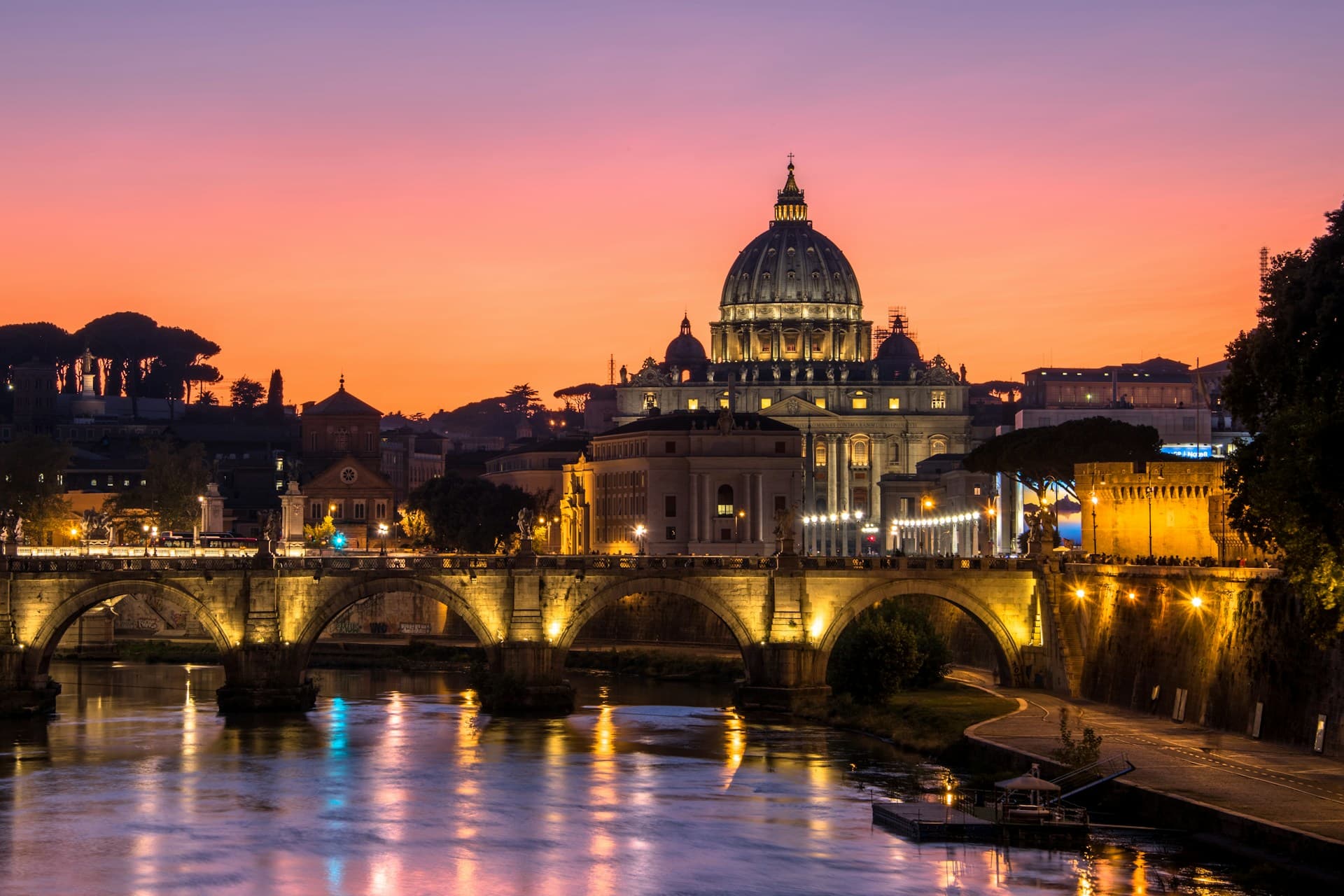
Legend says Romulus founded Rome on April 21, 753 BCE, but archaeology shows villages on its hills earlier that slowly grew together into a city.
Where this fits on the timeline. Every April 21, the city of Rome celebrates its birthday, and by tradition it is turning more than 2,770 years old. The story behind that date is a legend of twin baby boys, a river, and a she-wolf. The real beginning of Rome is harder to see: it lies in the soil of its hills, where archaeologists have found villages older than the legend. From these beginnings Rome grew into a kingdom, then a republic in 509 BCE, then an empire under Augustus, until the fall of Rome in the West in 476 CE.
The legend: twins, a wolf, and a quarrel
From Troy to Italy. Romans traced their story back to the Trojan War. They said that when the Greeks captured Troy with the Trojan Horse, the Trojan prince Aeneas, a son of the goddess Venus who also appears in Homer's Iliad, escaped and sailed to Italy. The poet Virgil told this story in the Aeneid. Aeneas' son founded the city of Alba Longa, and Julius Caesar's family proudly claimed descent from him.
A stolen throne. Generations later, the king of Alba Longa, Numitor, was overthrown by his younger brother Amulius. To make sure Numitor would have no heirs, Amulius forced Numitor's daughter Rhea Silvia to become a Vestal Virgin, a priestess of the hearth goddess Vesta, the Roman version of Hestia, sworn not to marry. Yet she gave birth to twin boys, Romulus and Remus, and said their father was Mars, the god of war, whom Romans identified with the Greek Ares.
The she-wolf. Amulius ordered the babies drowned in the Tiber River, but the river was in flood, and the basket holding them came to rest at the foot of the Palatine Hill. There, the story goes, a she-wolf found the twins and nursed them in a cave called the Lupercal, until a shepherd named Faustulus took them home and raised them with his wife. When the twins grew up, they killed Amulius and gave the throne back to their grandfather.
Six vultures and twelve. The twins decided to found a city of their own but argued over where. Romulus favored the Palatine and Remus the nearby Aventine. Each watched the sky for birds as a sign from the gods. The historian Livy says Remus saw six vultures first, then Romulus saw twelve, and both claimed victory. Romulus began building walls on the Palatine. Remus mocked them by jumping over, and he was killed. Livy gives two versions: Remus died in a brawl, or Romulus killed him, warning that anyone else who leaped his walls would die the same way. The city took Romulus' name.
The first king. Romulus filled his new town with refugees and runaways. Because the settlers had few wives, the Romans seized young women from their Sabine neighbors at a festival, which led to war, until the women themselves stepped between the armies and the two peoples joined together. Romulus also chose 100 'fathers' as Rome's first Senate. After a reign of 37 years, Livy says, he vanished in a sudden storm, and Romans worshipped him as the god Quirinus.
Where did 753 BCE come from?
A date calculated centuries later. No Roman historical records survive from the 700s BCE. The date 753 BCE was worked out in the first century BCE by the scholar Marcus Terentius Varro, building on the work of his friend Atticus. Earlier writers disagreed: Rome's first historian, Fabius Pictor, placed the founding around 748 BCE, and the Greek historian Timaeus said 814 BCE. The founding was celebrated on April 21, the date of an old shepherds' festival called the Parilia.
Counting the years. Romans usually named a year after its two consuls, but some writers counted ab urbe condita, 'from the founding of the city,' the phrase Livy used as his history's title. In 248 CE the emperor Philip the Arab held lavish games to celebrate Rome's 1,000th birthday.
Why the legend mattered. Livy, writing about 700 years after the supposed founding, admitted that these early tales were closer to poetry than to reliable records. But the story told Romans who they were: children of the war god, raised tough, and ready to put the city ahead of everything, even a brother.
What archaeology shows
People long before Romulus. Archaeologists have found traces of people on the Capitoline Hill from the Bronze Age, roughly 1700 to 1350 BCE. By about 1000 BCE, the low valley that later became the Roman Forum was used as a cemetery. On the Palatine, archaeologists have found the post holes of oval huts with thatched roofs and walls of woven branches and mud, dating to the 800s and 700s BCE. Romans later kept a thatched 'Hut of Romulus' there as a shrine.
Walls of the right age? Beginning in the late 1980s, the archaeologist Andrea Carandini uncovered the remains of a wall at the foot of the Palatine that he dated to about 775 to 750 BCE, and he argued that it supported the legend. Most scholars doubt it proves a single founder. In 2014, archaeologists digging in the Forum reported a wall and pottery dated to the 800s or early 700s BCE, older than the legendary founding.
Villages become a city. The evidence points to a gradual process, not one founding day. Separate hilltop villages slowly merged into one community. By the late 600s BCE the marshy Forum valley had been drained and paved as a public square. An inscription found beneath a black stone pavement in the Forum, the Lapis Niger, dates to the 500s BCE and contains a form of the Latin word for king, evidence that early Rome really had kings.
Why here? Rome's hills were easy to defend, the Tiber Island made a good river crossing about 15 miles (25 km) from the sea, and a salt route, later the Via Salaria, ran past it. Rome sat where three peoples met: the Latin speakers of Latium, the Etruscans to the north, and the Sabines to the northeast.
The seven kings
A kingdom for 244 years. Roman tradition lists seven kings between 753 and 509 BCE: Romulus; Numa Pompilius, credited with Rome's religious rituals and calendar; Tullus Hostilius, a warrior king; Ancus Marcius; Tarquinius Priscus, an Etruscan-born king said to have drained the Forum; Servius Tullius, credited with the first census; and Tarquinius Superbus, 'the Proud,' whose overthrow created the Republic. Reigns averaging about 35 years are suspiciously long, so historians doubt the details, though the later kings and strong Etruscan influence in the 500s BCE are more likely real. You can follow the whole story in the Ancient Rome journey.
Common mix-ups
Legend is not history. There is no evidence that Romulus existed. Many scholars think his name was made up from the city's name, 'Roma,' rather than the other way around. The 'founding' was a slow process of villages joining together.
753 BCE is a traditional date, not a proven one. It was calculated more than 600 years later, ancient writers disagreed about it, and archaeology shows people on Rome's hills well before then.
The famous wolf statue may not be ancient. The bronze Capitoline Wolf in Rome was long thought to be Etruscan work from the 400s BCE. The twins under it were added in the Renaissance, and scientific tests in the 2000s suggested the wolf itself may have been cast in the Middle Ages; experts still debate it. Keep the legend and the evidence separate on the World History final.
Check your understanding
1. According to legend, who founded Rome, and what happened to his brother? Romulus founded Rome after he and his twin Remus argued over where to build. Remus was killed, in Livy's versions either in a brawl or by Romulus himself after jumping over the new walls.
2. Why do historians call 753 BCE a traditional date? The scholar Varro calculated it in the first century BCE, more than 600 years later, and other ancient writers gave different dates. Archaeology also shows people living on Rome's hills before then.
3. Name two kinds of archaeological evidence about early Rome. Any two: Bronze Age traces on the Capitoline, hut foundations on the Palatine, an early cemetery in the Forum valley, early walls, or the Lapis Niger inscription mentioning a king.
Related on StudyQuest
Key Takeaways
1
In Roman legend, the twins Romulus and Remus, sons of Mars, were saved by a she-wolf; Romulus killed Remus in a quarrel and founded Rome, becoming its first king.
2
Romans also traced their ancestry to the Trojan prince Aeneas, whose story Virgil told in the Aeneid, and Julius Caesar's family claimed descent from him.
3
The date April 21, 753 BCE was calculated by the scholar Varro in the first century BCE; other ancient writers gave different dates, and the founding is celebrated on the old Parilia festival.
4
Archaeology shows Bronze Age traces on the Capitoline Hill, a cemetery in the Forum valley by about 1000 BCE, and huts on the Palatine from the 800s and 700s BCE, so settlement came before the legendary date.
5
Rome grew gradually as hilltop villages merged; by the late 600s BCE the Forum had been drained and paved as a public square.
6
Tradition lists seven kings from 753 to 509 BCE, ending with Tarquinius Superbus, whose overthrow created the Roman Republic.